Reviewed · HERAKLION
Archaeological and Natural Beauties of South Central Crete
Minoan ruins in the morning, swim time after. This day trip pulls you through two big ancient layers of south-central Crete: the Roman-era Gortyna and its standout Gortyn Law Code, then Phaistos, one of the most important power centers of the Minoan world. I also love that the route doesn’t feel like a checklist, because you get proper breaks in between—especially in Matala and Zaros.
The one thing to keep in mind is that it’s a full, packed day with walking on uneven archaeological ground and time outdoors in Crete’s sun. If you’re not comfortable with that pace (and the trip isn’t set up for mobility impairments), you’ll want to plan accordingly.
In This Review
- Key points at a glance
- Entering Gortyna: the Gortyn Law Code stop you’ll remember
- Phaistos Palace: Minoans showing up in a big way
- The Mesara valley drive: why the road time isn’t wasted
- Matala: swim in the crystal-clear water and reset
- Zarós: spring water, monasteries, and a village pace that feels human
- Lake Votomos and trout: food as part of the sightseeing
- Guides and pacing: why this trip works better than a rushed route
- Price and value: is $129 fair for 8.5 hours?
- Who should book this day trip
- Practical advice before you go
- Should you book this Archaeological and Natural Beauties of South Central Crete tour?
- FAQ
- What’s the meeting point for the tour in Heraklion?
- What time does the tour start and when do you return?
- How long is the tour?
- What stops are included in the itinerary?
- Is lunch included?
- Can you swim in Matala?
- What’s the highlight at Gortyna?
- Are Byzantine monasteries part of the Zarós visit?
- Is the tour suitable for people with mobility impairments?
Key points at a glance
- Gortyn Law Code: one of the most famous surviving inscriptions from ancient Crete
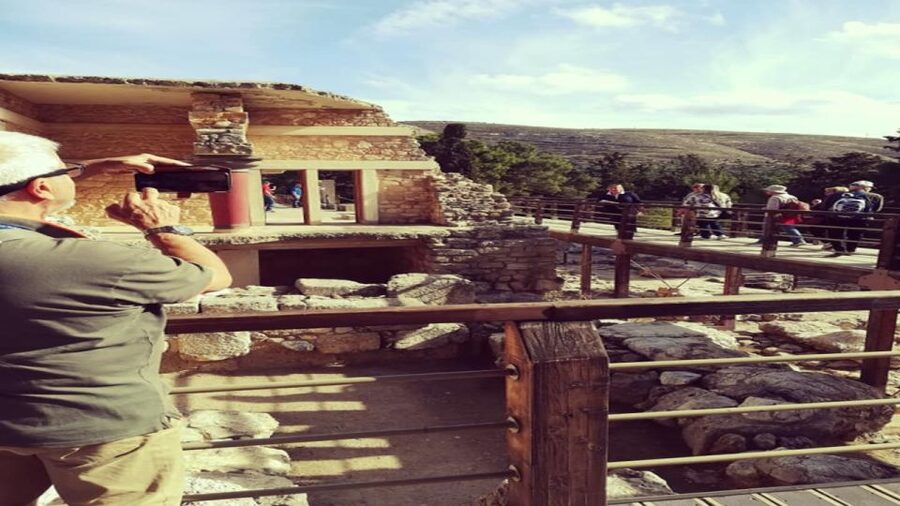
- Phaistos palace site: a major Minoan center, not a quick pass
- Matala free time: built in for swimming in crystal-clear water and a relaxed break
- Zarós village: refreshingly unspoiled, known for spring water bottled across Greece
- Byzantine monasteries + Lake Votomos: nature time, with trout served around town and by the water
- Guides with personality: guides like Sophia, Angeliki, Irini, and Rita are repeatedly praised for clear, friendly explanations and smart pacing
Still weighing up your options? Here are more Heraklion tours our readers keep coming back to.
- Heraklion: Dia Island Sailboat Cruise with Swimming and Meal★ 4.8 · 2,579 reviews
- Heraklion Area: CRETAquarium Admission Ticket★ 4.4 · 2,055 reviews
- Crete: Palace of Knossos E-Ticket and Audio Guide★ 3.8 · 1,540 reviews
- Crete: Sunset or Morning Quad with Local Products Tasting★ 4.9 · 1,135 reviews
Entering Gortyna: the Gortyn Law Code stop you’ll remember
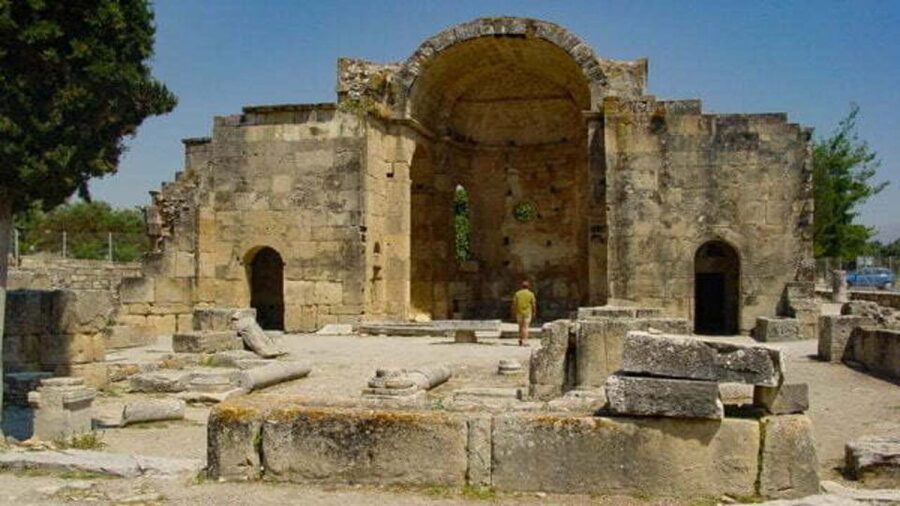
Gortyna (Gortyn) is where Crete starts talking like an organized empire. You drive in from Heraklion and settle into the Roman capital feel—big, practical, and built to last. The headline here is the Gortyn Law Code, an ancient stone text that’s famous for showing how people actually lived and regulated disputes in antiquity.
What makes this stop feel real is the way your guide helps you connect the legal language to the place around you. Instead of treating it like random carvings, you start noticing what it implies: social rules, public authority, and the kind of day-to-day order that underpins a city. It’s not just impressive. It’s usable history—history you can picture.
The small practical catch: Gortyna and the nearby archaeological areas involve standing and walking on uneven ground. If you’re sensitive to heat or you need long stretches of flat, paved surfaces, you’ll want comfortable shoes and a slow pace mindset.
Phaistos Palace: Minoans showing up in a big way
After Gortyna, the drive carries you through the Mesara valley, and that change of scenery matters. Crete’s interior has a different rhythm than the coast, and it helps you understand why major settlements clustered where they did. Then you reach Phaistos, the archaeological site and palace complex that was one of the most important Minoan centers in southern Crete.
This is the centerpiece stop on the day for a reason. Phaistos wasn’t just a palace—it was tied to power and wealth in a way your guide can explain in plain terms. You’ll see the palace area as a hub, not as ruins scattered on a field. With the right explanation, you can read the layout and start understanding how a site like this functioned.
Pro tip for your visit: give your guide your attention during the first part of the explanations, then use that understanding to look around on your own. The site is much more satisfying once you know what you’re looking for—where “center” likely was, how rooms and courtyards relate, and why this place mattered.
Also, the timing is set up so you don’t feel rushed. Guides on this route are praised for keeping a good balance: enough time to absorb Phaistos without losing momentum for the rest of the day.
The Mesara valley drive: why the road time isn’t wasted
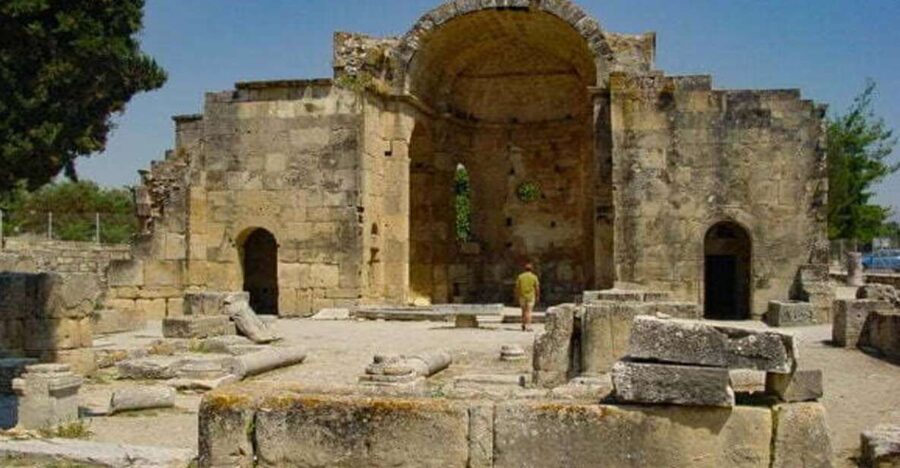
Between major sites, you’re not stuck in silence. On this route, the coach time is part of the experience, especially because your guide is working with what you can see through the window—geography and how it shapes settlement patterns. Even short drive segments help you make sense of the bigger story: cities rise where movement, farmland, and natural routes line up.
Your itinerary includes several quick transfer legs (around 30 minutes between stops at different stages), so the day flows steadily. That matters because it keeps you focused on one theme rather than feeling like you’re constantly commuting with no payoff.
Matala: swim in the crystal-clear water and reset
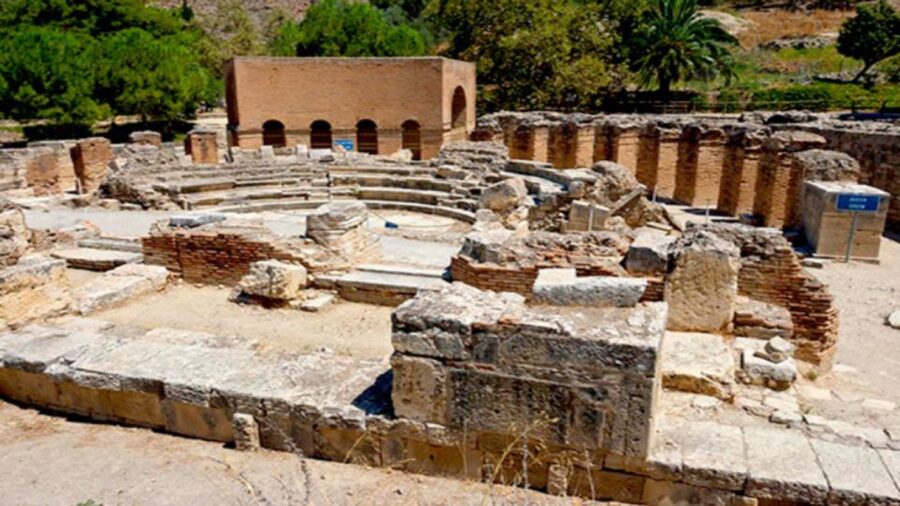
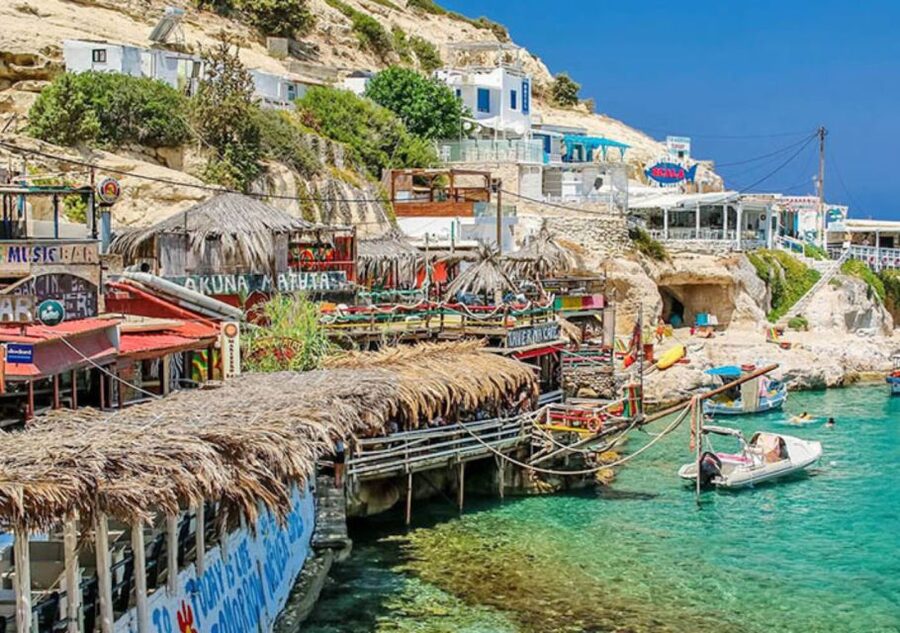
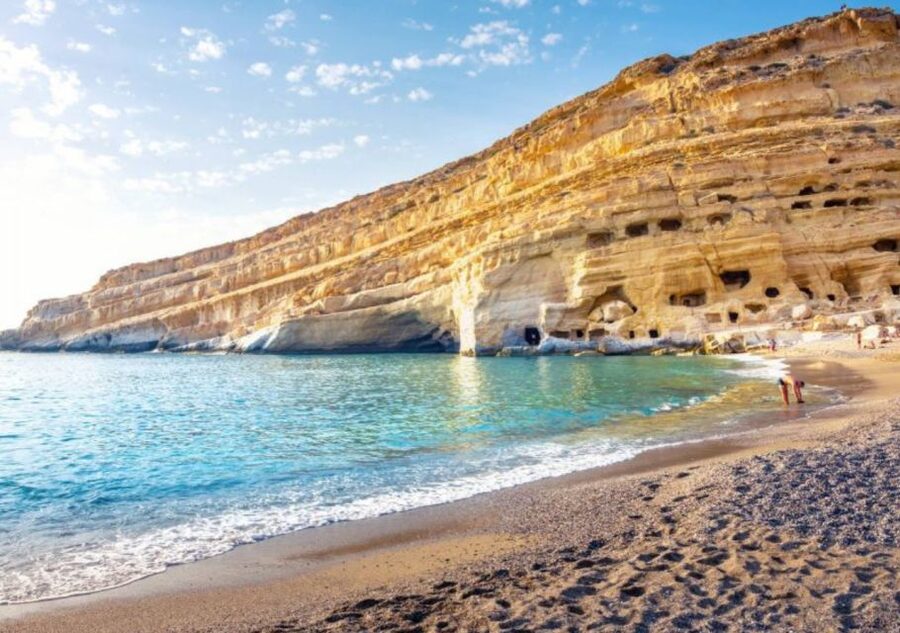
Then comes the fun break: Matala. This used to be the ancient port connected to Phaistos and Gortyn, and you’ll feel that mix of history and seaside downtime. The tour builds in free time for swimming in crystal-clear water, so you’re not just looking at places—you’re using them.
You also have the option of lunch at Matala. The key detail here: lunch isn’t included in the tour price, and the on-site restaurant meal comes with an additional cost. That doesn’t make it less valuable, but it does mean you should bring a bit of flexibility in your budget.
If you’re thinking about timing, aim to go for a swim early in the free-time window. It’s the kind of stop where a relaxed hour can turn into a long one if you’re busy chatting or wandering. The best move is to plan your swim first, then spend the rest of the time soaking up the port-town atmosphere.



Zarós: spring water, monasteries, and a village pace that feels human
By late afternoon, you roll into Zarós, and the mood changes. This is described as attractive and refreshingly unspoiled, and that feels accurate in how the village plays out on a short visit. One of the most specific local stories is the spring water: it’s now bottled and sold across Greece.
Zarós also has some fine Byzantine monasteries, which give you a second religious layer beyond what you’ll see at ancient sites. The monasteries add character, views, and a sense of continuity—people kept returning here long after the Minoans and Romans.
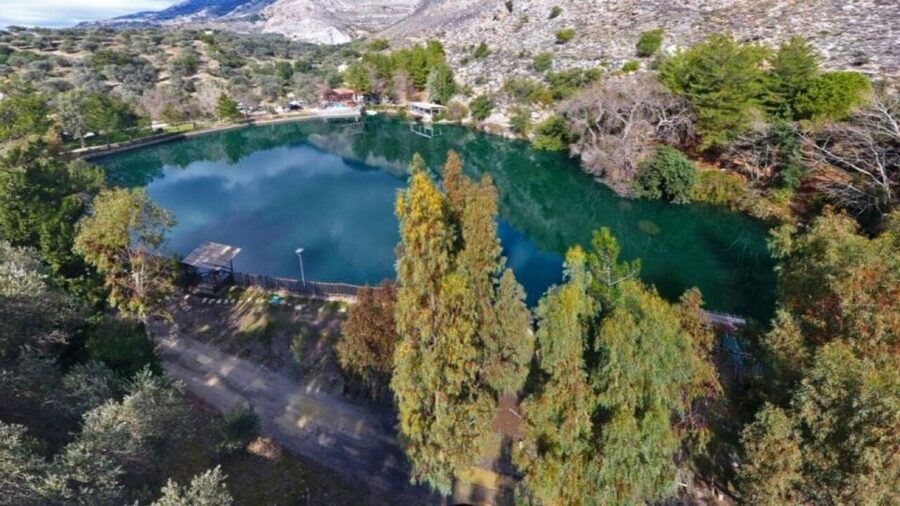
And there’s more. Your stop is also designed for nature lovers. Zarós is an ideal base for walkers to explore the surrounding countryside, and the tour includes a visit to Lake Votomos, where the water is described as emerald-green. If you like photo stops that don’t feel forced, this is the kind of setting that works.
Lake Votomos and trout: food as part of the sightseeing
One of the smartest touches on this tour is how it ties landscape time to food. Around Zarós and especially connected with Lake Votomos, you’ll find farm-raised trout served in tavernas—both around town and with the lake as part of the experience.
Even if you don’t plan to order trout, the idea is worth noticing: Crete’s food culture isn’t separate from the outdoors. It’s tied to local water, local farms, and the areas people actually live with day to day. If you do eat, consider it part of “reading” the place, not just fueling up for the ride back.
Just remember you’ll be deciding meals on the go. Lunch in Matala isn’t included, and drinks for any meal are also not included.
Guides and pacing: why this trip works better than a rushed route
A big reason this day trip earns strong scores is the guide quality. Guides such as Sophia, Angeliki, Irini, and Rita are praised for being intelligent, funny, friendly, and attentive to detail. More importantly, they’re described as the kind of professionals who don’t rush you through the sites.
That’s a rare and valuable trait on archaeology days. Ruins can be overwhelming if you’re left alone with stones and labels. Here, the explanations help you build a mental map—so you walk away feeling like you understood what you saw, not just that you took photos.
The timing also helps. You get a balanced rhythm: Gortyna first, then Phaistos as the major archaeological anchor, followed by Matala’s swim break, and then Zarós to wind down with monasteries and nature.
Price and value: is $129 fair for 8.5 hours?
At $129 per person, this tour sits in the “practical day trip” range, not the cheapest option, but also not priced like a private tour. Here’s why it can still feel like good value:
- You’re paying for an air-conditioned motorcoach, an experienced live guide, and guided time at multiple major sites across south-central Crete.
- The day includes three different types of experiences: major archaeology (Gortyna and Phaistos), a seaside reset (Matala), and a village/nature finish (Zarós and Lake Votomos).
- You’re not burning an entire day on one theme. That variety is part of the value, because it keeps the day from feeling repetitive.
What’s not included is also clear. Lunch and drinks are extra, so your final spend depends on how you handle meals. If you come prepared to pay for at least one lunch (or if you plan to eat light), you’ll avoid surprise budgeting.
Who should book this day trip
This tour is a great fit if you want:
- Minoan and Roman context without spending multiple days driving around southern Crete
- A mix of archaeology plus a real break (Matala swimming)
- A calmer end to the day (Zarós springs, monasteries, and Lake Votomos)
It’s not the best match if you:
- Need a trip with minimal walking and uneven surfaces
- Are traveling with someone who can’t handle long stretches outdoors
Practical advice before you go
Bring comfortable shoes first. The archaeological parts of the day involve uneven ground, and you’ll also want stable footing for village and monastery areas. It’s also smart to plan for water and sun: this is an outdoor-heavy route, especially with the Matala swimming time and the Zarós nature finish.
If you want to eat, budget for lunch at Matala (optional) and drinks at restaurants. The tour covers the guided sightseeing and transport, but meals follow the standard setup: you handle them on-site.
Also note the tour runs for about 8.5 hours, meeting in the morning and returning to Heraklion late afternoon.
Should you book this Archaeological and Natural Beauties of South Central Crete tour?
If you’re choosing between a simple coach ride and a genuinely guided day, I’d lean toward booking this one. The combination of Gortyn Law Code, the major Phaistos palace site, and a real reset in Matala makes the day feel balanced. Add Zarós with its spring-water story, monasteries, and the Lake Votomos setting, and you get more than “see ruins, go home.”
Book it if you like guided explanations that make ancient places make sense and you’re comfortable with a full day pace. Skip it if you want a slower, more leisurely schedule or you need strong mobility support.
FAQ
What’s the meeting point for the tour in Heraklion?
The meeting point is across from the entrance of the Heraklion Archaeological Museum, in front of Hari’s Creperie, Heraklion.
What time does the tour start and when do you return?
You meet at 08:30, and the tour returns to Heraklion at about 17:00.
How long is the tour?
The total duration is listed as 8.5 hours.
What stops are included in the itinerary?
The tour includes visits to Gortyna, Phaistos, Matala (with free time), and Zarós (including sightseeing and visiting Lake Votomos).
Is lunch included?
Lunch in a restaurant during the tour is not included. It’s listed as 20,00 € (with drinks and beverages not included).
Can you swim in Matala?
Yes. Matala includes free time with the opportunity to swim in the clear water.
What’s the highlight at Gortyna?
The highlight is admiring the Gortyn Law Code.
Are Byzantine monasteries part of the Zarós visit?
Yes. Zarós is known for its Byzantine monasteries, and you visit the area as part of the tour.
Is the tour suitable for people with mobility impairments?
No. The tour is not suitable for people with mobility impairments.
More Tour Reviews in Heraklion
- Heraklion: Dia Island Sailboat Cruise with Swimming and Meal
★ 4.8 · 2,579 reviews - Heraklion Area: CRETAquarium Admission Ticket
★ 4.4 · 2,055 reviews - Crete: Palace of Knossos E-Ticket and Audio Guide
★ 3.8 · 1,540 reviews - Crete: Sunset or Morning Quad with Local Products Tasting
★ 4.9 · 1,135 reviews - 5Hour Safari Tour in Crete(Heraklion)with Quad,Jeep,Buggy & Lunch
★ 5.0 · 941 reviews