Reviewed · HERAKLION
Orthodox Crete: In the Footsteps of the Apostle Paul from 55 AD
One religious road, many layers. This private day links Orthodox faith and major Cretan sites with a local guide. You’ll follow a Paul-era story frame while also seeing places like Phaistos and Matala that make the island’s history feel real.
What I like most is the pace and focus: shorter site visits (often under an hour) keep the day from dragging. I also love the practical comfort upgrade, with a chauffeured premium vehicle and onboard touches like Wi‑Fi and USB sockets for the drive.
One thing to consider: your time is tight in a good way, so you’ll want to keep the schedule in mind—this isn’t a slow wander day where you stop for long café detours.
In This Review
- Key highlights you should know before you go
- Why the Footsteps of the Apostle Paul route fits Crete so well
- Heraklion Prefecture start: warming up the story before the first stop
- Agios Myron at 400m: a village, a cave, and healing-water lore
- Messara Plain: seeing the unspoiled side of central Crete
- Moni Palianis: one of Crete’s oldest monasteries and the famous myrtle tree
- Palace of Faistos (Phaistos): the one admission charge and the payoff
- Odigitria Monastery (Agiofarango): the fortified edge-of-the-island experience
- Matala Beach finish: caves, Gortyna vibes, and a seafood reward
- Private vehicle comfort: how the transport makes a theme day work
- Your guide matters: what you can expect from the day’s storytelling
- What you’re paying for: value beyond the headline route
- Who should book Orthodox Crete, and who might not
- Should you book this tour?
- FAQ
- How long is the Orthodox Crete tour?
- Where does the tour take place?
- Is this a private tour?
- Do you get hotel pick-up and drop-off?
- Is the tour offered in English?
- Do I need admission tickets?
- What’s included in the vehicle?
- Is there a mobile ticket?
- Is cancellation free?
- Are service animals allowed?
Key highlights you should know before you go
- A Paul-in-Crete theme that connects early Christian ideas to Cretan Orthodox practice
- Monastery stops built for meaning, including Odigitria Monastery (Agiofarango) and Moni Palianis
- Agios Myron’s cave story tied to healing water and a village at altitude
- Phaistos Palace as the one major paid checkpoint (admission not included)
- Premium private transport with snacks, water, Wi‑Fi, and USB ports
Still weighing up your options? Here are more Heraklion tours our readers keep coming back to.
- Heraklion: Dia Island Sailboat Cruise with Swimming and Meal★ 4.8 · 2,579 reviews
- Heraklion Area: CRETAquarium Admission Ticket★ 4.4 · 2,055 reviews
- Crete: Palace of Knossos E-Ticket and Audio Guide★ 3.8 · 1,540 reviews
- Crete: Sunset or Morning Quad with Local Products Tasting★ 4.9 · 1,135 reviews
Why the Footsteps of the Apostle Paul route fits Crete so well
Orthodox Crete is built around a simple promise: you won’t just “see churches.” You’ll get a guiding storyline that explains how early Christian belief took root and how Orthodoxy shows up in daily life and sacred places across the island. That matters in Crete, where religious sites often share space with older layers—archaeology, local legend, and village tradition.
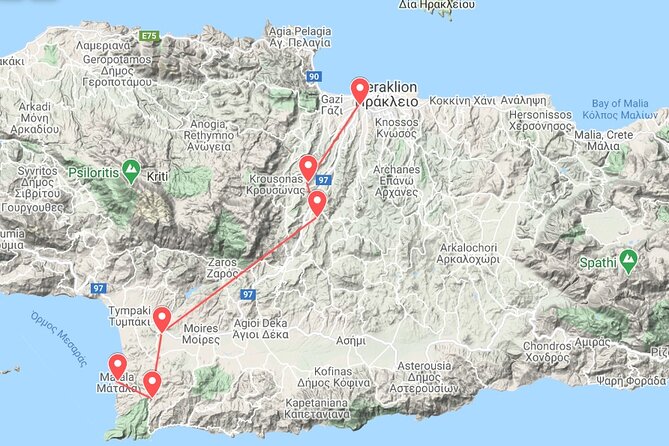
The other smart move is how the route balances devotion and context. You start in the Heraklion area, shift into monastery and village settings, then finish at Matala, where caves and the coast give you a powerful sense of time passing. You get the feeling of a long continuum: faith, settlement, and the sea all staying in the frame.
Heraklion Prefecture start: warming up the story before the first stop
The day starts back in the Heraklion prefecture zone with a dedicated introduction to Orthodox Christianity in Crete. This first segment is about setting the meanings you’ll see later—so when you reach monasteries and sacred caves, it doesn’t feel like you’re decoding random facts.
It also helps that your guide is private and local. A focused kickoff like this can change what you notice on the road: carvings, place names, and the way people talk about holy sites. If you care about how religion and history connect in everyday space, this opening is a good use of time.
Practical note: the tour runs about 8 hours, and the stops are scheduled in compact blocks. You’ll want to show up with comfortable shoes and a clear head, because the guide’s story thread is part of the experience.
Agios Myron at 400m: a village, a cave, and healing-water lore
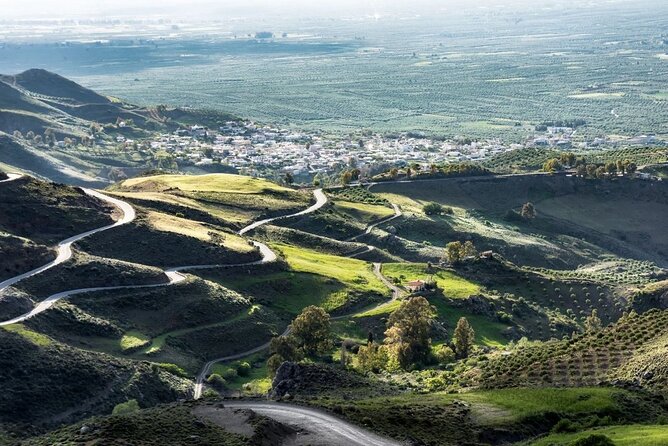
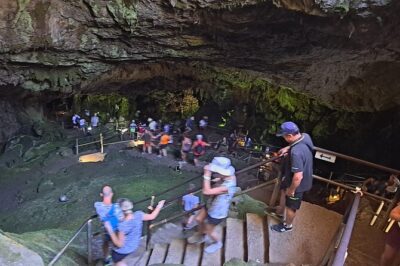
Agios Myronas is the kind of stop you’ll remember because it’s specific. You’ll head to an altitude around 400 meters and meet the village atmosphere of Agios Myron, plus his ascetic holy cave. The standout detail here is the claim that healing water still gushes from within the rock.
In a trip built on faith footsteps, a cave stop works. Caves naturally carry symbolism—shelter, water, and a sense of withdrawal from ordinary life. Even if you treat the healing-water tradition as local belief rather than a scientific claim, you’ll still get why people come: the place feels set apart.
Time is tight (about 35 minutes), so don’t plan on a long pause for photos and lingering. If you want a few keeper shots, go quickly to your best viewpoint early, then shift your attention to what your guide explains.
Messara Plain: seeing the unspoiled side of central Crete

Next comes the Messara Plain—an ancient valley area where the tour intentionally slows down just enough to change your perspective. This stop is about learning the region through local eyes, and it’s also where the route adds a second layer: the unspoiled side of the island alongside its spiritual side.
A plain is useful in a theme tour. In a place like Crete, you can’t understand settlement and religious spread without also understanding geography—how people moved, farmed, and built communities in open country. The Messara stop helps you connect those dots without turning the day into a pure archaeology lecture.
Expect about 45 minutes. You’ll likely get a mix of driving views and on-the-ground orientation, which is ideal if you want context but still want to keep the day moving.

Moni Palianis: one of Crete’s oldest monasteries and the famous myrtle tree
Moni Palianis is dedicated to the Assumption and is known as one of the oldest Cretan monasteries connected with this tradition. The headline detail is the sacred myrtle tree, described as a relic tied to Minoan-era Crete and dendrolatry (tree veneration). This is exactly the kind of cross-era connection that makes Crete feel like one long conversation between old and new.
The monastery itself gives you atmosphere: stone, structure, and the sense that worship has shaped the site over centuries. Even though your stop is about 35 minutes, it’s a meaningful chunk because monasteries are built to slow you down—if only by changing the sound and the pace of your thinking.
Small drawback: if you’re not into religious architecture or symbolism, this stop might feel faster than you’d prefer. If you are, it’s a highlight because the guide can tie together the Assumption dedication with the myrtle tree’s special status.
Palace of Faistos (Phaistos): the one admission charge and the payoff

This is the archaeology-heavy moment of the day. You’ll head along roads that go deeper, and you’ll spend time at the Bronze Age Festos (Faistos) Palace area. The key detail for your planning: admission is not included for this stop, so budget for an entry ticket here.
The tour frames Phaistos as part of the bigger story—ancient cities seemingly around corners and a sense that prehistoric Crete remains close by. If you want your spiritual theme to stay anchored in physical place, the palace stop matters. It shows you how old Cretan life looked, long before the later Orthodox layers.
Time is about 35 minutes. That can be enough to understand the layout and learn what to look for, but it’s not enough to read every stone. If you love archaeology, you’ll probably want to come back to Phaistos on a separate half-day later.
Odigitria Monastery (Agiofarango): the fortified edge-of-the-island experience
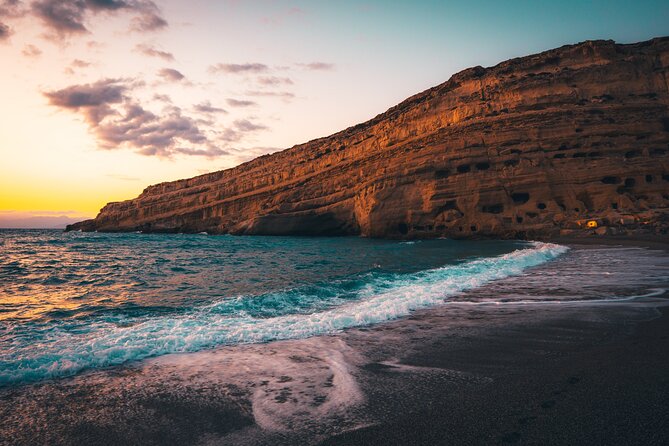
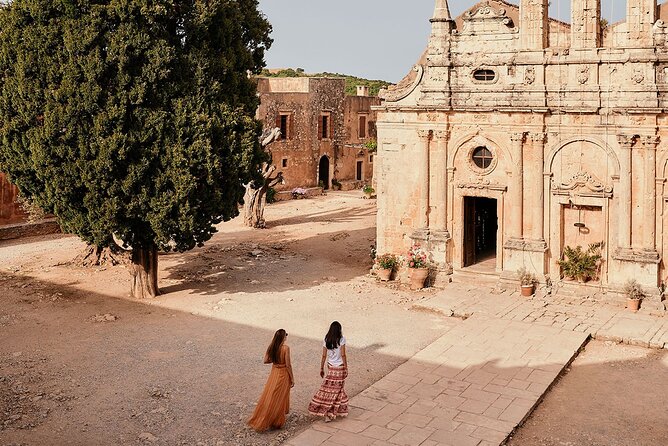
Toward Crete’s southern corners, the day shifts to Odigitria Monastery, also known as Agiofarango. This stop is described as a jewel of monastic Crete, with fortified architecture that echoes an extraordinary cultural legacy.
Fortified monasteries have a different emotional feel than coastal chapels. They suggest protection, endurance, and a monastery that had to think beyond worship alone. The guide’s explanation can also help you connect why this kind of architecture appears where it does—especially in places where the terrain naturally shapes what’s possible.
You’ll spend around 45 minutes. This is a good stop for photos, but don’t treat it like a quick picture pull. The value here is understanding what the walls and design are trying to tell you.
Matala Beach finish: caves, Gortyna vibes, and a seafood reward
You’ll end the day at Matala Beach, described as a prehistoric port of Gortyna with iconic caves dating back to Neolithic Age times. After monasteries, caves, and holy water traditions, it’s a smart final turn: the caves now feel connected to settlement and the coast, not only to sanctity.
The tour also includes time to relax—about 2 hours—and to indulge in seafood dishes. Even if you’re not set on a specific meal, you’ll be close to the action where you can choose your own pace and food.
This is the best place to decompress. Sit by the water, take your time around the caves, and let the day’s theme settle in your brain. If you’re traveling with kids, this is also the kind of stop where attention naturally sticks—rocks, caves, sea, and space to breathe.
Private vehicle comfort: how the transport makes a theme day work
A long theme day lives or dies on logistics. Here, the setup is designed to keep you from spending energy on the wrong problems. You get personal pick-up & drop-off from your hotel, villa, cruise, or another point on Crete, with a flexible pick-up time confirmed after booking.
On the road, you’ll travel in a chauffeured premium vehicle with mineral water, Cretan fruits & snacks, Wi‑Fi, USB sockets, and hygiene amenities. That’s not just luxury; it’s practical. When you’re hopping between religious and archaeological sites, the fewer distractions you have, the more you can focus on the stories.
One more detail I appreciate: the tour includes VIP skip-the-line access and assistance with purchasing admission tickets. Even if you’re fine with lines, skipping them helps you protect the schedule.
Your guide matters: what you can expect from the day’s storytelling
This trip is private, and the guide is local. Based on names and styles connected with this tour, guides can bring strong Judeo-Christian context and turn place names into usable meaning. You might meet guides such as Gethsemane or Ioanna, and other highly recommended guides like Alex and Nektar, each bringing their own teaching style to the same route.
What’s especially valuable is the tailoring. The tour is set up as a private experience, with tailored details based on what you care about most. If you’re interested in the early Christian thread, you’ll likely get more focus on the religious storyline. If you’re more drawn to archaeology, you’ll likely get extra emphasis on stops like Phaistos.
Also, conversation is a big part of what makes the day memorable. If you enjoy asking questions, this tour structure gives you room to do it.
What you’re paying for: value beyond the headline route
Admission fees are not included, and that matters for your real cost. The tour specifically flags the Palace of Faistos admission as not included, while other stops are listed with free admission tickets. So in practice, you should expect the biggest direct entry cost at Phaistos, with other sites often not requiring additional payment.
What’s included is where the value stacks up: private guide time, skip-the-line help, VIP ticket assistance, and transport with snacks and amenities. That makes the trip feel “bought,” not “assembled.” You aren’t trying to stitch together your own itinerary while also driving and navigating.
There’s also a concierge layer: restaurant recommendations and reservations assistance, plus support before and during the day. When your day includes multiple stops and you don’t want to think about what’s next, that support is worth something.
If you’re traveling as a couple or small family, the private format can be a strong deal because you’re paying for both access and clarity. If you’re a solo traveler on a tight budget, you might compare this to independent driving plus a guide for just one site. But if your goal is understanding the Orthodox storyline across multiple places, this format saves time and mental effort.
Who should book Orthodox Crete, and who might not
Book this if you:
- Want a theme-based day that connects early Christian roots with Orthodox practice in real places
- Enjoy religion plus archaeology, not just one or the other
- Appreciate a private guide and a comfortable ride so you can focus on questions and photos
- Like a clear schedule with minimal friction
You might choose something else if you:
- Prefer long open-ended time at fewer sites
- Want every stop to be purely outdoor sightseeing
- Don’t care about faith context and would rather keep the day secular and light
This is most rewarding when you’re curious and willing to listen. The route works best when the guide’s explanations become part of what you experience.
Should you book this tour?
If your ideal day in Crete includes monasteries, caves, and the kind of explanations that make place names mean something, I think you’ll be happy with this one. It’s built to reduce stress: pickup happens from wherever you’re staying, you ride in comfort, and you get help with tickets and timing.
The only real caution is budget and pace. Admission is not included overall, and you should expect the Phaistos Palace ticket to be on you. Also, you’ll be moving through multiple meaningful stops, so don’t book this if you want a slow, unstructured wander day.
FAQ
How long is the Orthodox Crete tour?
It runs about 8 hours.
Where does the tour take place?
The tour is based around Heraklion, Greece, and it includes stops across central Crete into the southern corners.
Is this a private tour?
Yes. It’s a private tour, and only your group participates.
Do you get hotel pick-up and drop-off?
Yes. You can arrange personal pick-up and drop-off from your hotel, villa, cruise, or another point on Crete island. Pick-up time is flexible and confirmed at final confirmation.
Is the tour offered in English?
Yes, it’s offered in English.
Do I need admission tickets?
Admission fees are not included in the overall tour listing. One stop, the Palace of Faistos, specifically notes that admission is not included, while several other stops list admission ticket free.
What’s included in the vehicle?
You get a chauffeured premium vehicle with mineral water, Cretan fruits & snacks, Wi‑Fi, USB sockets, and hygiene amenities.
Is there a mobile ticket?
Yes. You’ll receive a mobile ticket.
Is cancellation free?
Cancellation is free up to 24 hours in advance for a full refund.
Are service animals allowed?
Yes, service animals are allowed.
More Tour Reviews in Heraklion
- Heraklion: Dia Island Sailboat Cruise with Swimming and Meal
★ 4.8 · 2,579 reviews - Heraklion Area: CRETAquarium Admission Ticket
★ 4.4 · 2,055 reviews - Crete: Palace of Knossos E-Ticket and Audio Guide
★ 3.8 · 1,540 reviews - Crete: Sunset or Morning Quad with Local Products Tasting
★ 4.9 · 1,135 reviews - 5Hour Safari Tour in Crete(Heraklion)with Quad,Jeep,Buggy & Lunch
★ 5.0 · 941 reviews