
Reviewed · HISTORICAL TOURS
Cretan Stories – A Journey Through History and Tradition
History gets real fast in Crete.
I like the way this day connects Arkadi’s rebellion story to what you can actually see on the ground, and I also love the hands-on, real-life feel of the Tsikalario ceramics workshop with Mrs. Helen. The only real drawback to weigh is the extra cost for key sites (entrance fees add up), and the museum stop at ancient Eleftherna is a bit of a mixed bag depending on your interests.
You’ll move at a comfortable pace for a full day: air-conditioned transport, hotel pickup across a wide stretch of North Coast towns, then a sequence of stops that mix big history with craft-making. It’s built for people who want structure without having to plan every step, and it’s capped at 50 travelers so it doesn’t feel like a cattle-car. One more practical note: it’s offered in English, and language availability can vary depending on the day.
Key points to know before you go
- Arkadi Monastery: history explained en route, then time to walk the rooms and the area tied to the explosion
- Ancient Eleftherna: a long timeline, from 3000 BC to 1300 AD, plus a museum stop that may not thrill everyone
- Margarites pottery village: two hours to browse and fit lunch into your own rhythm
- Melidoni Cave: Cretan revolution significance, with a few formations that may feel altered for access
- Tsikalario ceramics workshop: clay-to-object demo by the owner and artist, Mrs. Helen
- Value math: tour price is modest, but you should budget about €13 for paid entrances
In This Review
- Arkadi Monastery: The Cretan Revolution, Explained and Then Walked Off
- Ancient Eleftherna Museum: A 3000 BC to 1300 AD Timeline (With a Paywall)
- Margarites Pottery Village: Browse, Walk, and Fit Lunch Your Way
- Melidoni Cave: Revolution History Under the Ground (and Some Tough Love About Changes)
- Tsikalario Cretan Ceramics: Watching Clay Become an Object with Mrs. Helen
- The Olive Oil Stop: A Quick Culture Break, but Not Always a Buyer’s Paradise
- Price, Timing, and Logistics Across the North Coast
- Who This Tour Suits Best (and Who Should Skip It)
- Should You Book Cretan Stories: Rethymno History and Crafts?
- FAQ
- Where does the tour pick you up?
- How long is the tour?
- What entrance fees should I budget for?
- Is the tour offered in English?
- How big is the group?
- Can I cancel for free?
Arkadi Monastery: The Cretan Revolution, Explained and Then Walked Off

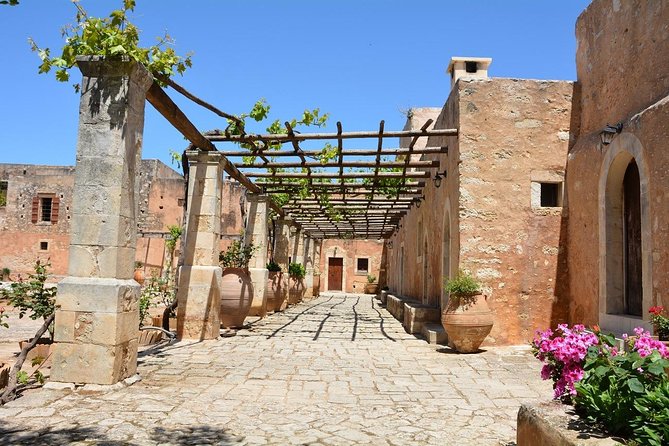
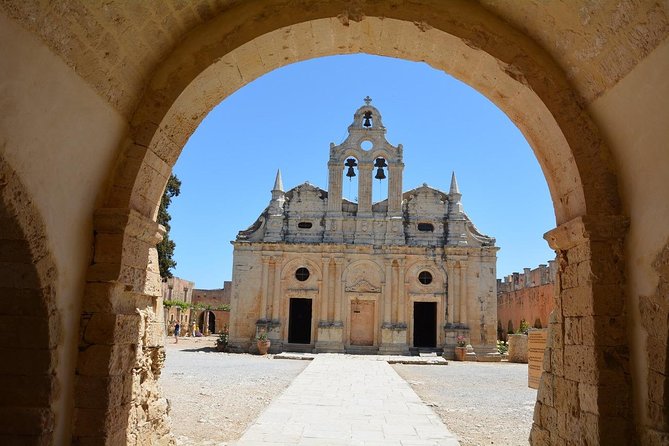
If you want your Crete history to feel more than names on a page, Arkadi Monastery is the star stop. This is tied to the most important story of the Cretan revolution, and the guide sets the scene before you even arrive. That bus briefing matters. It gives you a mental map, so when you’re standing in and around the monastery you’re not guessing what you’re looking at.
Once you get your free time, you can take it at your own pace. There are small stone paths that pull you through different areas, and you can step into the rooms that connect to the key events. The most striking part is time in the big room linked to the explosion. Even if you’re not a history nerd, that physical space helps the story land.
The main consideration here is time and energy. This is a full-day tour, and Arkadi is one of the places where you’ll likely want to linger a bit. You get about an hour, so keep your phone and photos in check and focus on reading what’s in front of you. Admission for Arkadi isn’t included, so plan for that added cost.
If your goal is to understand why locals still talk about this revolution with emotion and detail, this stop does that job better than most “monument” visits you’ll find.
A handful more Heraklion trips we reckon are worth your time
- From Heraklion: Historical Center City Tour & Knossos Palace★ 4.4 · 340 reviews
- Ecobike tour in historic Heraklion★ 5.0 · 134 reviews
- Knossos Palace & Historical Heraklion City Tour, with Old Market★ 4.5 · 51 reviews
- Cretan Stories – A Journey Through History and Tradition★ 4.5 · 17 reviews
Ancient Eleftherna Museum: A 3000 BC to 1300 AD Timeline (With a Paywall)
Next comes ancient Eleftherna, where the day stretches across thousands of years. The site connects local and religious life from 3000 BC all the way through 1300 AD. That scope is impressive on paper, and it can be genuinely worth your time if you enjoy layered archaeology.
You’ll spend around 40 minutes here, and there’s a museum entrance involved with this stop. Admission is not included, and you should budget for it as part of the overall paid sites total.
Here’s the honest part: the museum component is where opinions can split. Some people walk away thinking it was the most expensive place in the day without feeling they got proportional value. If you’re the type who likes artifacts and interpretive displays, you may enjoy it more. If you’d rather spend your hour outdoors or in workshops, you might find this the least efficient stop.
My practical advice: go in with flexible expectations. Treat it as context. Even if the museum part doesn’t wow you, the idea of Eleftherna as a long-running center of life and belief can help the rest of the day make more sense.
Margarites Pottery Village: Browse, Walk, and Fit Lunch Your Way
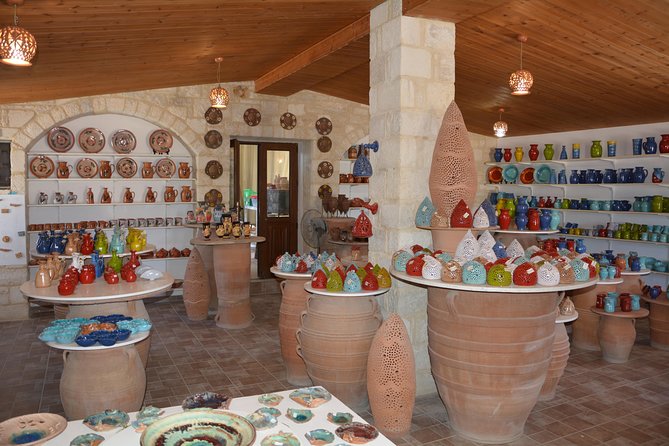
Then you get to Margarites, a village known for pottery. This is one of those stops that works for almost everyone because it’s low-pressure and visual. You have time to walk through the village on your own, soak up the craft atmosphere, and browse shops that sell ceramic goods.
You get about two hours total, and that time is gold. It’s enough to wander without feeling rushed, but not so long that your day drags. The big win is that Margarites gives you control over one of the hardest parts of a tour day: lunch. If you want a break from the bus routine, you can stop at a local tavern for food and keep going afterward.
What to do while you’re there:
- Look for different styles and shapes, not just the most obvious souvenirs
- Take your time comparing pieces, especially if you care about quality
- If you’re buying ceramics, keep breakage in mind and consider how you’ll transport it back
Also, Margarites is a good reminder that Crete isn’t only ruins and monasteries. It’s craft people still working today, and this village helps you feel that continuity.
Melidoni Cave: Revolution History Under the Ground (and Some Tough Love About Changes)
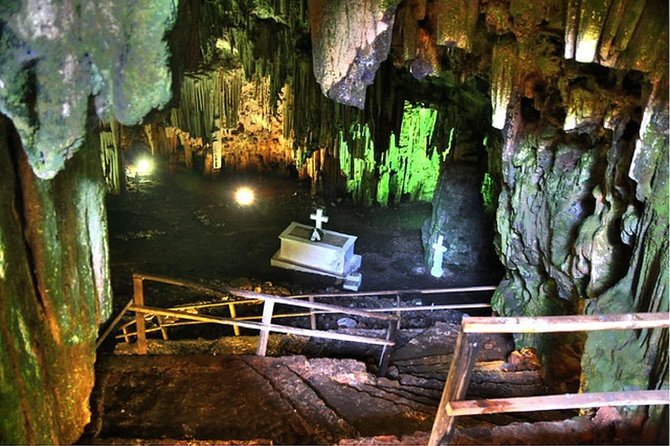
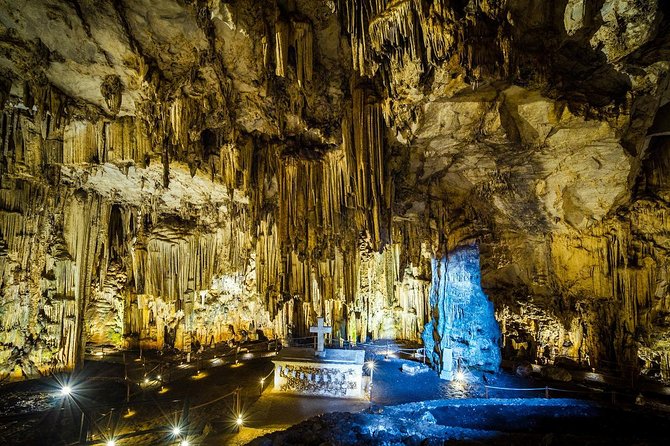
The tour heads to Melidoni Cave, another key setting tied to the Cretan revolution during the period of Turkish occupation. Caves are always a little dramatic on a tour day, but this one has more than atmosphere. It connects to real historical events, so your time underground feels tied to the wider story instead of being a random stop.
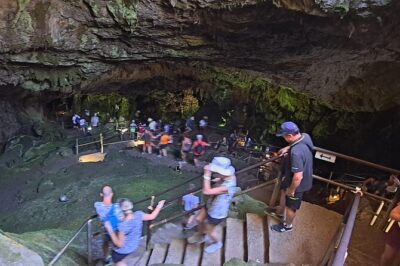
You’ll get about 40 minutes here, which is enough for the main route and a slow look. Admission for the cave isn’t included.
Now for the cave issue you should know about: one review raised a concern about nature being modified for access, including claims that some stalactites were cut down to improve appearance or visitor access. You don’t have to agree with the critique to take it seriously. Go in expecting that caves managed for visitors can look different than the version you imagine from photos.
My suggestion: judge the cave in person, then decide how you feel. If you’re very sensitive to the idea of conservation versus access, mentally label this as a place where modern infrastructure may have changed the visuals.
Either way, Melidoni is still worth seeing if you want the revolution story to stretch beyond buildings and into the geography people used and hid in.
Tsikalario Cretan Ceramics: Watching Clay Become an Object with Mrs. Helen
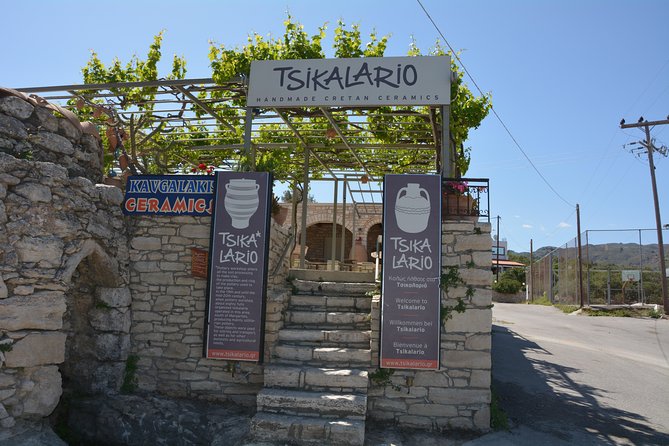
One of the most satisfying parts of this day is the ceramics workshop near Margarites at Tsikalario. This isn’t just a photo stop. You’ll meet the people behind the craft.
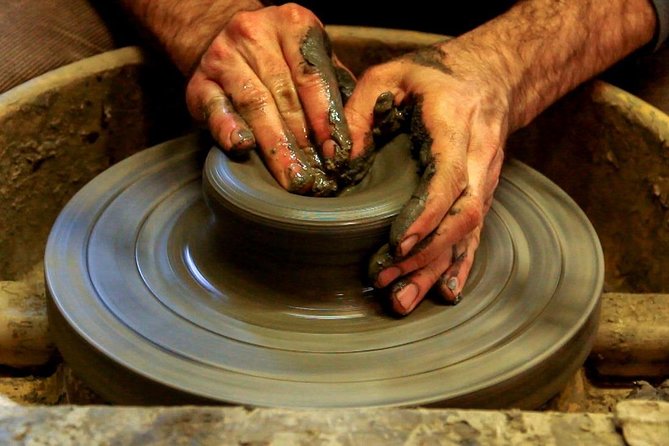
The workshop is linked to Mrs. Helen, the owner and artist, who shows live how clay turns into an object you can use. That live demonstration is the big value here. It turns “pottery village” from a place into a process. You can see tools, materials, and the step-by-step transformation, which is harder to appreciate from shops alone.
You’ll have about 40 minutes at the workshop, with the chance to ask questions and look closely at finished pieces. Admission is free for this stop, which makes it an efficient use of your paid tour day.
If you like crafts, this is the part that tends to convert casual interest into actual appreciation. You’ll likely start noticing details in the village shops afterward. And if you’re in the mood to buy something, this is also where you can anchor your souvenir choice in what you saw made.




The Olive Oil Stop: A Quick Culture Break, but Not Always a Buyer’s Paradise
You may also get an olive oil tasting and product element during the day. One participant felt the tasting lineup and shopping selection could be better, especially for people who care about variety and sampling.
I wouldn’t frame this as a deal-breaker. It’s a common thread in Crete tours, and even a short tasting can be a pleasant break from history and caves. But if your main goal is crafts and sites tied to the revolution story, treat the olive oil stop as a bonus, not the core.
Practical move: if you’re shopping, don’t assume you’ll find the widest range of brands. Look carefully at what’s offered and decide based on quality rather than the mere fact that it’s local.
Price, Timing, and Logistics Across the North Coast
At $36.05 per person, this is one of those tours that looks budget-friendly on the surface. The real value question is what’s included versus what’s extra.
The tour price covers:
- Air-conditioned vehicle
- Pickup and drop-off across multiple towns (including Bali, Panormo, Skaleta, Adele, Platanias, Atsipopoulo, Rethymno town, Kavros, Georgioupoli, and others listed)
- Mobile ticket
- English as the offered language
- A full-day structure that keeps you from wrestling with transfers on your own
What costs extra:
- Entrance fees for Arkadi, Eleftherna museum, and Melidoni Cave are listed as €13.00 per person.
So think of it as roughly a two-part budget: your tour fee plus paid entrances. Still, the math tends to work for travelers who want multiple meaningful stops in one day without the hassle of driving between them.
Timing is also important. This runs about 8 to 9 hours, so you’ll want to treat it like a full-day commitment, not a half-day wander. Since pickup happens from a spread of locations, your start time depends on where you’re staying.
A helpful operational detail: you’re asked to wait outside your hotel reception about 10 minutes before pickup. That saves time and stress, especially if your driver is juggling multiple pickups.
Group size is capped at 50 travelers, which is large enough for comfort but small enough that it usually won’t turn into total chaos. I’d also call this tour a good fit for people who like guided context and then personal time inside each location.
Who This Tour Suits Best (and Who Should Skip It)
This is a strong match if you:
- Want Crete history tied to real places tied to the revolution
- Like craft culture as much as archaeology
- Prefer a guided day with built-in free time rather than total DIY planning
- Enjoy markets, workshops, and the chance to see how things are made
You might want to reconsider if you:
- Hate paying entrance fees on top of the tour price
- Are very museum-focused (the Eleftherna museum stop can feel like the weakest link)
- Are sensitive to how tourist access can change natural spaces, especially in caves
If you’re pairing this with other Rethymno-area sightseeing, I’d put it early in your schedule. It helps anchor the rest of your trip, because Arkadi and the revolution story give context to what you’ll see in other places.
Should You Book Cretan Stories: Rethymno History and Crafts?
I’d book it if your dream day in Crete looks like this: monastery drama above ground, a revolution-linked cave below, a pottery village where you can walk and breathe, and a workshop with a real artist teaching you what clay becomes. The workshop with Mrs. Helen and the time in Margarites are especially good value for your attention.
I’d pause if your top priority is only one thing, like museums or beaches. This tour is balanced by design, and that balance means one stop can miss for certain tastes—especially the paid museum portion at ancient Eleftherna.
If you can afford the small entrance-fee add-on and you’re ready for an active, full-day schedule, this is a smart way to understand Crete beyond the postcard.
FAQ
Where does the tour pick you up?
Pickup and drop-off are offered in Bali, Panormo, Skaleta, Adele, Platanias, Atsipopoulo, Rethymno town, Kavros, and Georgioupoli. You’re asked to wait outside your hotel reception about 10 minutes before the pickup time.
How long is the tour?
Plan for about 8 to 9 hours.
What entrance fees should I budget for?
Entrance fees for Arkadi, Eleftherna Museum, and Melidoni Cave are listed as €13.00 per person. Other workshop and village time is not listed with entrance fees.
Is the tour offered in English?
Yes, the tour is offered in English.
How big is the group?
The tour has a maximum of 50 travelers.
Can I cancel for free?
Yes. Free cancellation is offered, and you can cancel up to 24 hours in advance for a full refund.
More History Around Heraklion
- From Heraklion: Historical Center City Tour & Knossos Palace
★ 4.4 · 340 reviews - Ecobike tour in historic Heraklion
★ 5.0 · 134 reviews - Knossos Palace & Historical Heraklion City Tour, with Old Market
★ 4.5 · 51 reviews - Small Group Eastern Crete Heritage Tour for Cruiseships
★ 5.0 · 11 reviews
More Tour Reviews in Heraklion
- Heraklion: Dia Island Sailboat Cruise with Swimming and Meal
★ 4.8 · 2,579 reviews - Heraklion Area: CRETAquarium Admission Ticket
★ 4.4 · 2,055 reviews - Crete: Palace of Knossos E-Ticket and Audio Guide
★ 3.8 · 1,540 reviews - Crete: Sunset or Morning Quad with Local Products Tasting
★ 4.9 · 1,135 reviews - 5Hour Safari Tour in Crete(Heraklion)with Quad,Jeep,Buggy & Lunch
★ 5.0 · 941 reviews
Not quite it? Keep exploring what there is to do around Heraklion


Historical Tours, compared.
 ★ 4.4Historical Center City Tour & Knossos PalaceFrom $47340 reviews
 ★ 5.0Ecobike tour in historic HeraklionFrom $90134 reviews
 ★ 4.5Knossos Palace & Historical Heraklion City Tour, with Old MarketFrom $4851 reviews
 ★ 5.0Small Group Eastern Crete Heritage Tour for CruiseshipsFrom $32511 reviews
Browse the lists this tour appears in